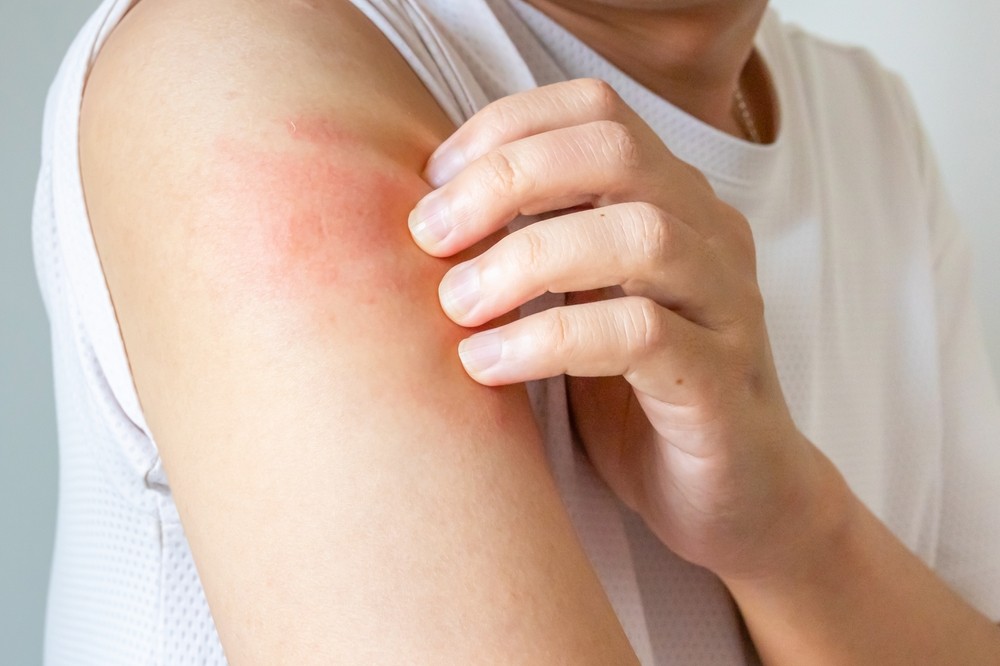
Patient-Reported Outcomes Measurement Information System (PROMIS) short-form instruments performed well in a cohort of 549 US adults with chronic skin disease (median age 36; 52.3% women) recruited via an online research recruitment platform, spanning acne (44.8%), atopic dermatitis (45.1%), psoriasis (20.6%), and other conditions. Baseline measures (February 5–7, 2025) and ~3-month follow-up (April 30–May 29) included PROMIS domains (anxiety, depression, social satisfaction, social isolation), single-item pain and itch, Skindex-29, and the Dermatology Life Quality Index. PROMIS showed strong structural validity (CFI/TLI > .95; SRMR < .08) and high internal consistency (Cronbach α > .90), with construct validity supported by known groups and convergent analyses. These results suggest PROMIS can be integrated into dermatology clinics to efficiently capture physical, emotional, and social impacts while complementing disease-specific tools.
Responsiveness varied by domain. Pain (SRM .41) and itch (.32–.44) tracked change comparably to Skindex-29 symptoms (.47), and PROMIS social isolation (.27) and social satisfaction (−.20) aligned with Skindex-29 functioning (.25). By contrast, PROMIS anxiety (.11) and depression (.16) were less responsive than the Skindex-29 emotions domain (.43), indicating mood changes may be better detected by disease-specific items. Overall, PROMIS offers a validated, scalable profile for monitoring outcomes in chronic skin disease. Further work is needed to confirm generalizability across broader, more diverse populations and to optimize emotional health measurement in this context.
Reference: Smith T. PROMIS Outcome Measures Effective for Evaluating Chronic Skin Disease. HCPLive. Published January 1, 2026. Accessed January 12, 2026. https://www.hcplive.com/view/promis-outcome-measures-effective-evaluating-chronic-skin-disease
Link: PROMIS Outcome Measures Effective for Evaluating Chronic Skin Disease | HCPLive