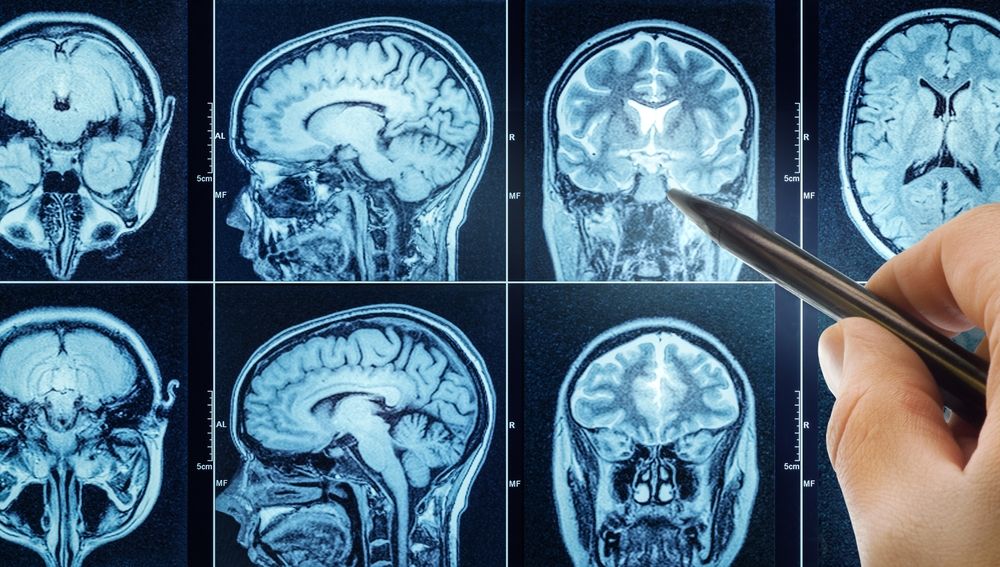
Visual hallucinations affect approximately 40% of people with Parkinson’s disease and often worsen with progression, driving distress and poorer quality of life for patients and families. Traditional structural MRI studies have yielded mixed, often underpowered findings for grey matter atrophy. Larger pooled and longitudinal work points to progressive cortical thinning—especially in posterior/parietal regions—and thalamic subnuclei changes. Because axonal alterations can precede neuronal loss, diffusion approaches sensitive to white-matter micro/macrostructure (eg, fixel-based analysis) detect more consistent disruptions in posterior thalamic radiations, corpus callosum, and occipito-temporal association pathways than conventional diffusion tensor imaging.
Functional imaging converges on network-level dysfunction. Hallucinators show altered coupling among visual, attention, salience, and default-mode networks and spend more time in segregated brain states. Spectral dynamic causal modelling demonstrates reduced bottom-up input from the lateral geniculate nucleus to V1 alongside increased top-down influences from prefrontal cortex to visual cortex and thalamus. Methodological heterogeneity, medication effects, and symptom definition remain limitations. Newer longitudinal, higher-order diffusion, and directionality-aware connectivity methods are clarifying mechanisms and highlighting targets for standardized assessment and future multimodal, multi-center studies.
Reference: Bhome R, Thomas GEC, Zarkali A, Weil RS. Structural and Functional Imaging Correlates of Visual Hallucinations in Parkinson’s Disease. Curr Neurol Neurosci Rep. 2023;23(6):287-299. doi: 10.1007/s11910-023-01267-1.