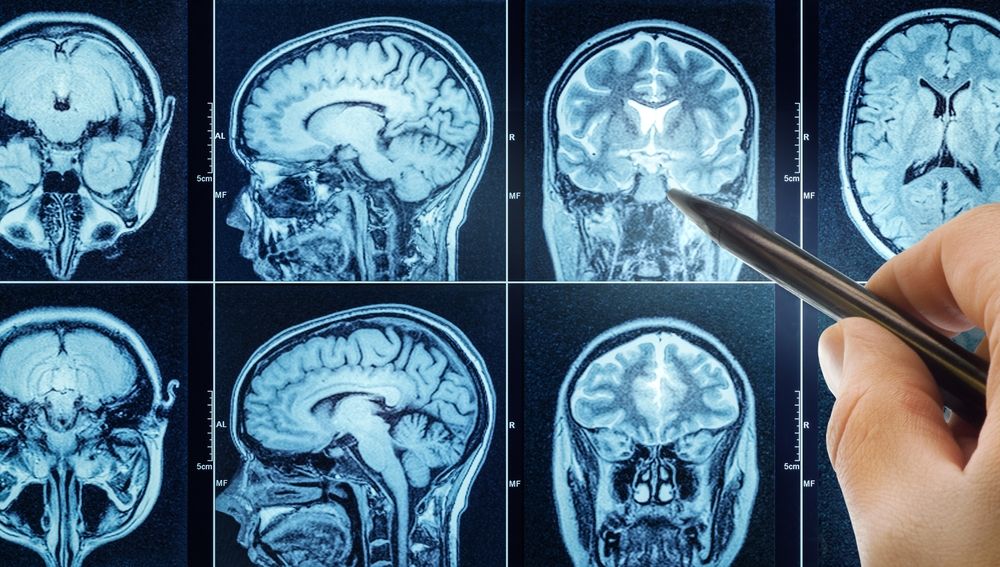
In a recent study, researchers tested whether altered coupling of the amygdala and the nucleus basalis of Meynert (NBM) with visual and attentional networks contributes to visual hallucinations (VHs) in Parkinson’s disease (PD). Seventy PD participants (30 with VHs, 40 without) underwent 3T structural and resting-state functional magnetic resonance imaging; seed-based connectivity was computed for bilateral amygdala and NBM to canonical networks (visual, dorsal/ventral attention, default mode, frontoparietal), and mediation analyses assessed whether NBM–ventral attention network (VAN) connectivity mediates the link between amygdala–attention connectivity and VHs (false discovery rate [FDR]-controlled).
Compared with non-hallucinating PD, the VH group showed reduced amygdala connectivity with the visual network bilaterally (strongest in ventral extrastriate cortex) and reduced left-amygdala coupling to both dorsal and ventral attention networks. NBM–VAN connectivity trended lower in VHs but did not survive FDR; however, it fully mediated the association between left amygdala-VAN connectivity and VHs and partially mediated the amygdala-dorsal attention link. No amygdala or NBM volumetric differences were detected, indicating functional dysconnectivity without overt atrophy. Findings support a model in which amygdala–attentional network disruptions, amplified by cholinergic basal forebrain (NBM) dysconnectivity, bias perception toward internally driven interpretations.
Reference: Ignatavicius A, Churchill L, Anderson J, et al. Combined Dysfunction of the Amygdala and Nucleus Basalis Underlies Visual Hallucinations in Parkinson’s Disease. Mov Disord. 2025. doi: 10.1002/mds.70011. Epub ahead of print.
Link: https://movementdisorders.onlinelibrary.wiley.com/doi/10.1002/mds.70011