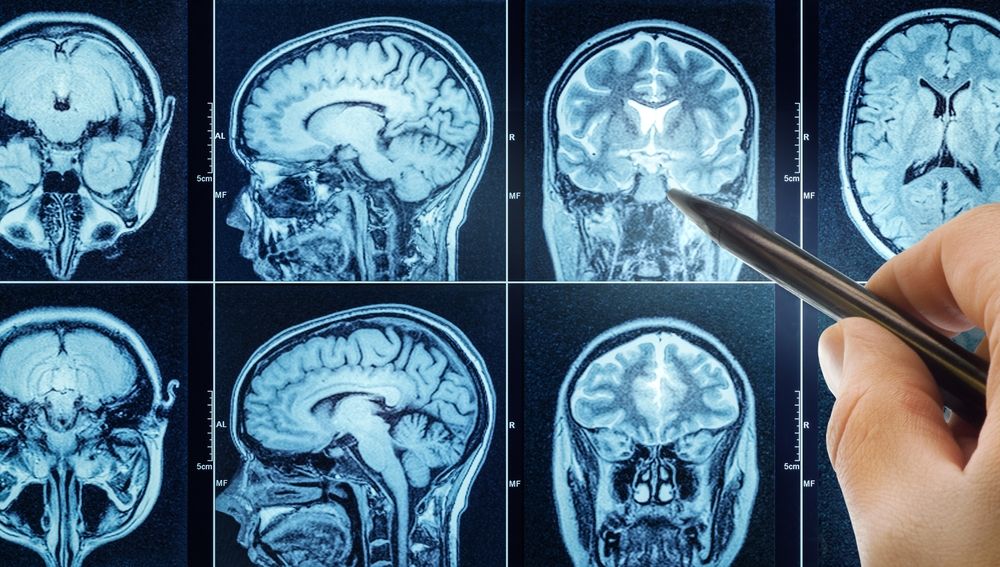
Researchers of this longitudinal Parkinson’s Progression Markers Initiative study followed 103 newly diagnosed, hallucination-free patients with Parkinson’s disease (PD) with baseline resting-state functional magnetic resonance imaging (fMRI) to identify clinical and network predictors of hallucinations over two years. Twenty patients developed hallucinations (mostly minor). At baseline, those with hallucinations (PD-H+) and and those without hallucinations (PD-H−) were similar in age, sex, motor severity, and cognition, but PD-H+ had higher REM sleep behavior disorder and autonomic symptom scores, and more excessive daytime sleepiness (EDS) and impulse-control behaviors. Head motion was controlled, and voxel-based morphometry showed no gray-matter differences.
Independent component analysis revealed a preclinical connectivity signature in future hallucinators: reduced intra-network connectivity in the dorsal attention network (left supramarginal/superior parietal), increased intra-network connectivity in the default mode network (right precuneus/posterior cingulate), and reduced inter-network coupling between dorsal attention network (DAN) and the visual network (all family-wise error-corrected). In multivariable models, EDS (OR≈6.9) and autonomic dysfunction (OR≈6.5) increased risk, while higher default mode network connectivity (OR≈5.6) and lower DAN and DAN–visual connectivity (OR≈0.22 and ≈0.004) independently predicted incident hallucinations. A model combining clinical and functional connectivity (FC) markers outperformed clinical markers alone (area under the curve 0.927 vs 0.795), supporting FC-based risk stratification and pointing to disrupted attention–default mode network–visual interactions as early hallucinatory mechanisms in PD.
Reference: Li G, Jiang M, Chen X, et al. Clinical and Functional Connectivity Markers in Prediction of Hallucinations in Parkinson’s Disease. CNS Neurosci Ther. 2025;31(6):e70432. doi: 10.1111/cns.70432.